
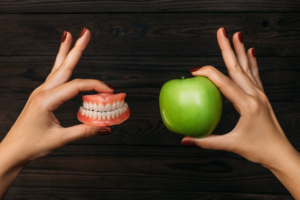
Your body accomplishes a lot, but something it does need help with is getting all the vitamins and minerals necessary to keep things running smoothly. Eating a balanced diet is a big part of this. Fruits, vegetables, lean proteins, and even carbohydrates all have a place on the food pyramid for a reason!
Studies suggest, though, that for those who wear traditional dentures, getting essential nutrients is a bit more complicated than making sure they’re eating the right foods.
The Importance of Thorough Chewing
As it turns out, your teeth support nutrition in more ways than one. Tearing into healthy meals is only a part of the puzzle. Your teeth also help you chew your food thoroughly. This not only makes your food easier to swallow, but also coats it in saliva, which contains enzymes that aid in digestion. Simply put, proper chewing helps your body absorb the vitamins and minerals you’re consuming.
How Dentures Affect Chewing Ability – and Nutrition
Chewing with dentures is ultimately more effective than trying to eat with multiple missing teeth. However, traditional dentures only retain 20% to 50% of your original bite force. Many denture wearers have limited diet options because it’s difficult for them to eat crunchier, tougher options. Experts note that they’re also more likely to experience malnutrition because they can’t chew their food as thoroughly as they need to for effective nutrition absorption.
Getting More Out of Your Meals
Since denture wearers have a harder time getting the most out of their meals, it’s important to be thoughtful about what you’re eating and how you’re eating it. A vegetable smoothie, for example, can be a great alternative for those who struggle to eat raw, crunchy greens. Sides like eggs, cottage cheese, applesauce, and oatmeal, meanwhile, are both nutrient-dense and relatively easy to eat alongside entrees.
Another solution to consider is transitioning to implant dentures. This hybrid restoration involves connecting a denture to six or more dental implants, which are anchored to the jawbone much like natural dental roots. Implant dentures retain much more bite power than their traditional counterparts, and stay firmly in place as the mouth moves. They allow patients to enjoy all of their favorite healthy foods and promote better chewing!
Whether you’d like to try implant dentures or stick with your traditional set, it’s a good idea to talk to your dentist and primary care physician about your nutrition. They can help you make sure you’re getting everything you need to function well and live your life to the fullest.
About the Practice
Our team at EMA Dental of Westfield seeks to help patients enhance their oral health and their overall confidence. We have several caring and compassionate general dentists on-staff, along with a board-certified prosthodontist, experienced aesthetic dentist, and highly trained implant dentist. We’re well-equipped to help you with a variety of concerns, including getting the nutrients you need while wearing dentures. To schedule a visit at our Westfield office, call 413-568-1698.